


Ever wished you had a user manual for your colleagues? Understanding the DISC model is the next best thing. While you can't ask everyone to take a quiz, you can learn to spot their dominant style through simple observation. This guide will show you how to identify each DISC profile—from the obvious signs to the subtle nuances—and provide a playbook for interacting with them effectively at any level of your organisation.
Part 1: Spotting the Four DISC Profiles
Learning to "speed-read" people is about noticing patterns in their pace, priorities, and communication. Here’s what to look for.
'D' for Dominance: The Driver 🐅
The primary motivation for a 'D' style is results. They are fast-paced, decisive, and task-oriented.
-
Obvious Tell-Tale Signs:
-
Pace & Body Language: They walk and talk quickly. Their body language is confident, purposeful, and they make direct, unwavering eye contact.
-
In Meetings: They get straight to the point, often interrupt to redirect the conversation, and push for decisions and action items. They'll ask, "So, what's the bottom line?"
-
Communication: Direct, blunt, and concise. They care more about the result than the pleasantries.
-
-
Subtle, Overlooked Nuances:
-
Email Style: Their emails are often just a few words, sometimes without a greeting or closing. Example: "Approved. Get it done."
-
Workspace: Functional and minimalist. It's a place for work, not socialising. You won't see many personal photos, but you might see awards or trophies.
-
Reaction to Small Talk: They see it as an obstacle. They will give short answers and try to steer the conversation back to the task at hand.
-
'I' for Influence: The Inspirer 🦚
The primary motivation for an 'I' style is recognition and enthusiasm. They are fast-paced, optimistic, and people-oriented.
-
Obvious Tell-Tale Signs:
-
Pace & Body Language: Energetic and animated. They use a lot of hand gestures, have expressive facial features, and are generally cheerful.
-
In Meetings: They are the storytellers and brainstormers. They love to talk, build on ideas, and keep the energy high. They might go off on tangents.
-
Communication: Persuasive, friendly, and informal. They talk about people, experiences, and feelings.
-
-
Subtle, Overlooked Nuances:
-
Email Style: Friendly and full of personality. Expect exclamation points, emojis, and a conversational tone. They might call you moments after sending an email to talk about it.
-
Workspace: Social and personalised. You'll see photos of friends and travel, colourful items, and an open door.
-
How They Enter a Room: They often greet multiple people on their way to their desk. They know people's names and will ask about their weekend.
-
'S' for Steadiness: The Supporter 🐕
The primary motivation for an 'S' style is stability and support. They are slower-paced, calm, and people-oriented.
-
Obvious Tell-Tale Signs:
-
Pace & Body Language: Calm, relaxed, and patient. They are excellent listeners and will give you their full, undivided attention with a gentle, reassuring posture.
-
In Meetings: They are the harmonisers. They listen to all sides, ensure everyone has a chance to speak, and will ask clarifying questions to ensure stability.
-
Communication: Warm, agreeable, and polite. They often use "we" instead of "I" and focus on the team and the process.
-
-
Subtle, Overlooked Nuances:
-
Email Style: Polite and thoughtful. They'll often start with a pleasantry ("Hope you're having a good week") and end warmly.
-
Workspace: Comfortable and welcoming. You'll likely see photos of family, plants, and items that create a calm, homey feel.
-
Reaction to Sudden Change: Their first reaction is hesitation. They need time to process and will ask questions to understand how the change will impact the team's stability.
-
'C' for Conscientiousness: The Analyst 🦉
The primary motivation for a 'C' style is accuracy and quality. They are slower-paced, reserved, and task-oriented.
-
Obvious Tell-Tale Signs:
-
Pace & Body Language: Reserved, thoughtful, and controlled. They are not overly expressive and maintain a more formal, serious demeanour.
-
In Meetings: They are the fact-checkers. They come prepared with data, ask specific, probing questions, and will point out potential risks or flaws in a plan.
-
Communication: Precise, formal, and logical. They stick to the facts and avoid emotional or exaggerated language.
-
-
Subtle, Overlooked Nuances:
-
Email Style: Well-structured and detailed. They use formal greetings, clear subject lines, and often attach spreadsheets or documents to back up their points.
-
Workspace: Organised, neat, and systematic. Everything has its place. You will see reference books, charts, or organised filing systems.
-
Decision-Making Process: They will not be rushed. They need all the available information and time to analyse it before committing.
-
Part 2: The Interaction Playbook
Once you have a good idea of someone's style, you can adapt your approach for better outcomes.
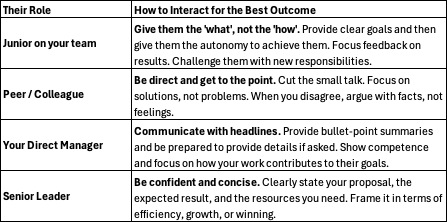
Interacting with the 'D' Style (Driver)
-
Positives: Decisive, efficient, goal-oriented, confident, great in a crisis.
-
Negatives: Can be impatient, insensitive, demanding, and may overlook risks.
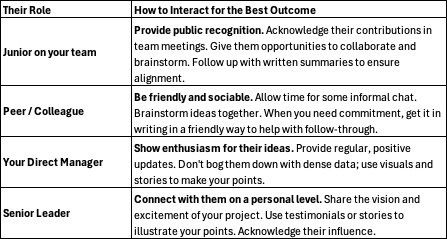
Interacting with the 'I' Style (Inspirer)
-
Positives: Enthusiastic, persuasive, optimistic, great at networking and building morale.
-
Negatives: Can be disorganised, talk more than they listen, and may over-promise.
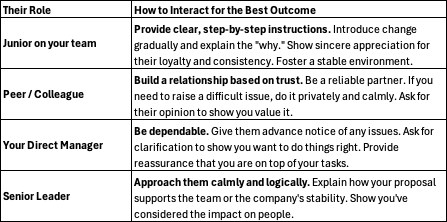
Interacting with the 'S' Style (Supporter)
-
Positives: Reliable, supportive, patient, excellent listeners, create stable teams.
-
Negatives: Can be resistant to change, avoid conflict, and may be indecisive.
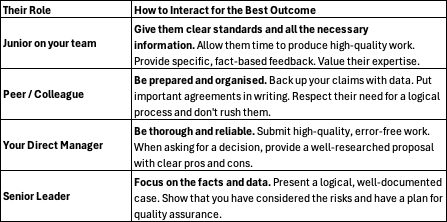
Interacting with the 'C' Style (Analyst)
-
Positives: Accurate, analytical, detail-oriented, maintains high standards.
-
Negatives: Can be perfectionistic, overly critical, and slow to make decisions ("analysis paralysis").
Final Thoughts
Putting this knowledge into practice isn't about becoming an amateur psychologist; it's about becoming a more adaptable and effective communicator.
On a daily basis, this means making small, powerful adjustments that reduce friction and get better results. Instead of using a one-size-fits-all approach, you can now quickly tune into your colleague's preferred "frequency." You'll learn to get straight to the point with a busy 'D' style, share a story to energise an 'I', offer reassurance to a hesitant 'S', and provide the data a 'C' needs to feel confident. These micro-adjustments make every meeting, email, and conversation more impactful and less stressful.
In the long term, these consistent daily actions are the building blocks of strong, trusting professional relationships. When people feel that you "get them," they are more likely to collaborate with you, support your initiatives, and trust your leadership. Mastering this skill is a career accelerator. It allows you to "manage up" more effectively by aligning with your boss's priorities, lead your team with greater empathy, and influence peers with ease. Ultimately, understanding DISC isn't just about reading others; it's about expanding your own toolkit to become a more versatile and influential professional, no matter where your career takes you.
If you would like to discuss in detail the best ways that you can interact with the people that you work with in order to either advance your career or just to have better relationships in the workplace, contact me here.
Add comment
Comments